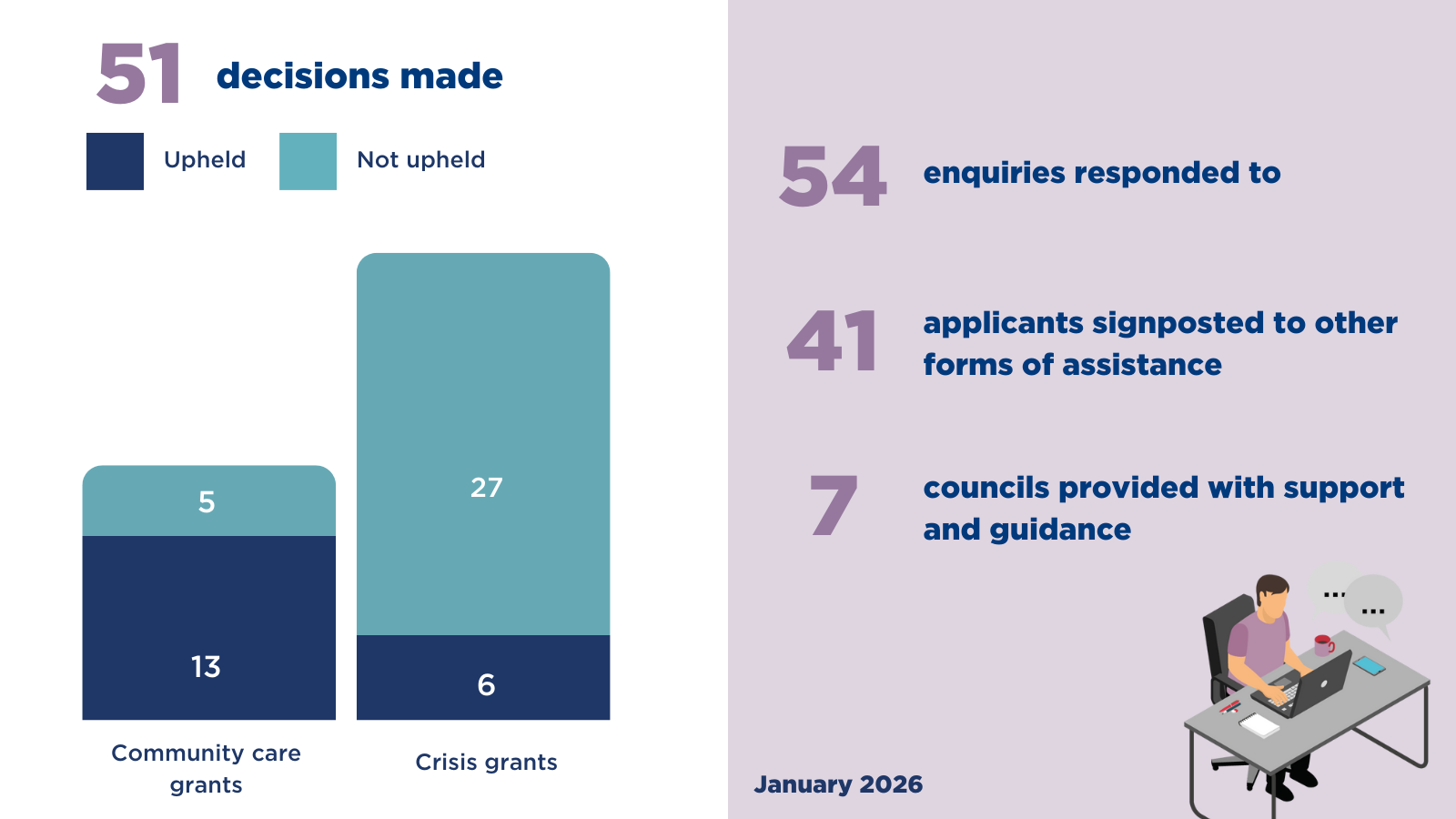
During November we
- responded to 54 enquiries
- made 51 decisions
- 18 community care grants
- 33 crisis grants
- upheld 13 (72%) of community care grants and 6 (18%) of crisis grants
- signposted an additional 41 applicants to other sources of assistance. 51% of these were calling us instead of their local council in error. 27% of these applicants noted that they had accessibility issues contacting the council as there was no freephone number, they were unable to apply on line or the council was closed for the festive period.
- received 7 enquiries from council staff seeking advice. The remaining callers were contacting us too early in the process. We signposted them back to their local council.
Engagement
To continue our commitment to raising awareness of the Scottish Welfare Fund (SWF) review process, we will be meeting with a local Citizens Advice centre and colleagues from an SWF team this month. We are also planning further sessions with criminal justice services and an MSP’s office in the coming weeks to strengthen engagement.
As part of our Learning Through Data project, we are inviting pilot councils and colleagues from the Scottish Government into the office to review the draft framework at the end of the month. This framework is designed to improve meaningful qualitative data reporting and analysis within SWF. The session builds on our co-design workshop in November 2025, where we gathered valuable feedback from councils. We are also attending a practitioner session for all councils to provide an update on the project and share next steps.
Case studies
High most compelling
C applied for a community care grant after their family became homeless following domestic abuse. C had also experienced the bereavement of a child and was suffering from a serious illness. The application requested several household items and flooring.
The council awarded a single bed, mattress, fridge freezer, and cooker but declined the other items as not meeting High Most Compelling (HMC) priority. After further information from C’s representative, two additional beds were granted, but other items remained refused.
At independent review, we noted that C was starting dialysis and receiving support from charities and social work. We found that the council had not acted on C’s request for an interpreter and made no further enquiries. We revised the decision, awarding flooring and curtains at High Most Compelling (HMC) priority, taking into account C’s health needs, the family’s trauma, and the rights and vulnerabilities of the children. We concluded the council did not have sufficient information to make a robust decision.
Recommendations
- We instructed the council to award a living room carpet, three bedroom carpets, kitchen and bathroom link, four set of curtains.
Feedback for the council
- The council did not make sufficient enquiries.
- The council did not follow the guidance when C asked for an interpreter.
- The council issued the first tier decision outwith the target timescales.
You can find more case studies in the searchable case directory on our website.